Card Ladder
- 5.0
- Rating
- 100.00K
- Installs
- Free
- Price

 Analysis by App-foxy
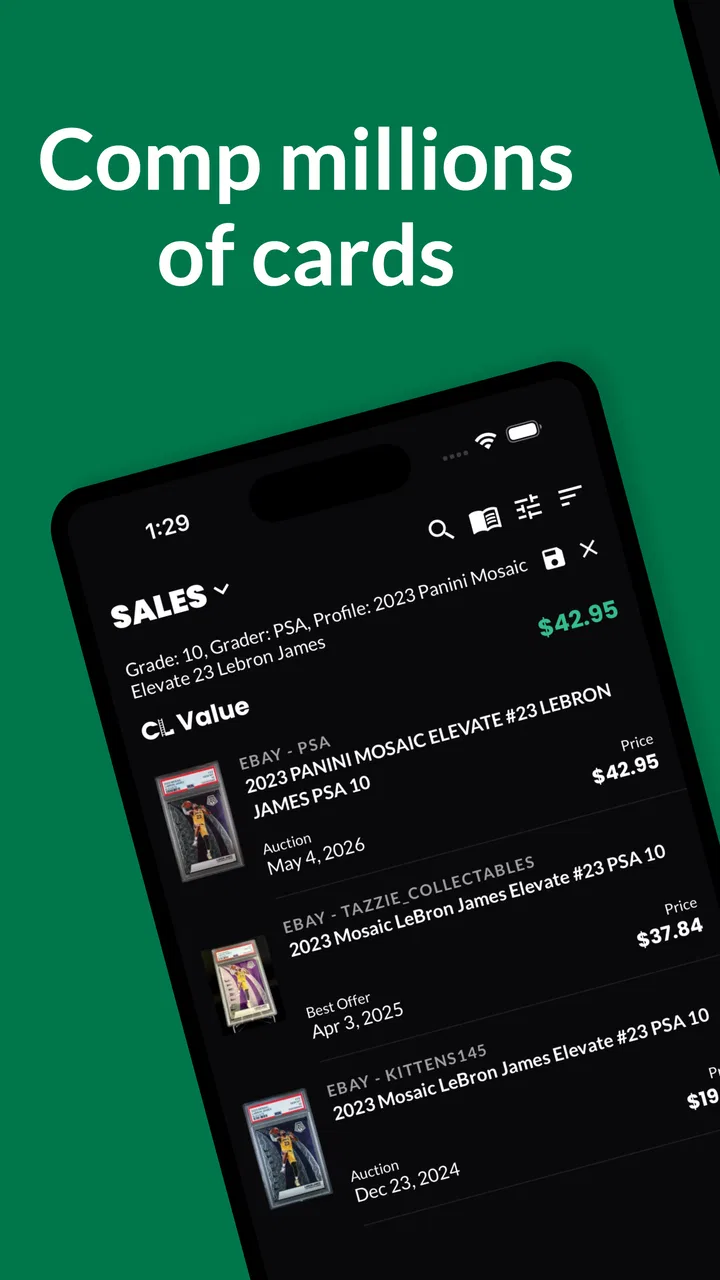
Card Ladder is the kind of sports app that makes sense once collecting stops being a casual hobby and starts involving decisions. I used it as a reference point for sports cards and Pokémon cards, and its main appeal is clear: it brings price checking and collection tracking into the same place instead of forcing me to jump between marketplace searches, saved photos, spreadsheets, and memory. It is free to download, aimed at Everyone, and developed by Ladder Studios, Inc.
I would not describe it as a simple catalog for browsing pretty card images. Its value is more practical. When I wanted to understand what a card might be worth, organize cards I already owned, or compare an item with recent market activity, the app gave me a more focused workflow than a general web search. The important distinction is that it is designed around cards as assets to identify, monitor, and evaluate, not merely as collectibles to admire.
That focus also explains who will enjoy it most. A new collector can use it to learn the language of card values, while an experienced collector can use it to keep a repeatable record of a collection. Someone who only wants occasional entertainment or a quick estimate for one card may find the process more involved than necessary. My experience was strongest when I treated Card Ladder as a working tool rather than an app I opened without a specific collecting task.
You May Also Like

 Pandora - Music & Podcasts
Pandora’s Music Is Easy to Start, but Harder to Recover
Pandora’s strength is its low-effort path from a seed to a station. Its weak spot is how much confidence it asks you to place in connection, setup, and quiet recovery.

 8 Ball Pool
 Is Built on Rivalries, Rematches, and Routine
A close look at the rivalries, rematches, shared routines, and unanswered safety questions that turn a quick pool match into a persistent mobile community.

 Samsung Music
’s Quiet Strength Is Playing What You Already Own
Its reach comes less from spectacle than from dependable access to a personal library. That simplicity is both the app’s strongest retention engine and its ceiling.

 AccuWeather: Weather Radar
AccuWeather Review: A Quick, Clear Forecast for Everyday Decisions
For everyday plans, the best forecast is the one you can understand quickly. AccuWeather makes rain timing, radar, and local conditions easy to act on, with a few trade-offs.

 Hill Climb Racing
Why Hill Climb Racing Still Turns Crashes Into One More Run
A tiny car, a bumpy hill and one more upgrade: Hill Climb Racing keeps resurfacing because its simple chaos makes every near-miss feel personal.

 AliExpress - Shopping App
AliExpress Makes Global Shopping Feel Personal, but Shoppers Bear the Risk
AliExpress turns a global marketplace into a pocket-sized discovery engine. Its reach is useful, its shopping loop compelling, and its trade-offs easy to miss.
More From Our News Desk
View All News


How I built a useful card-checking routine
I build a useful card-checking routine by giving each session a clear purpose and keeping a short list of details to verify, such as the set, card number, and version. That makes it easier to pause when a match is uncertain instead of letting a rushed search become a misleading record. I also find it helpful to separate routine checks from bigger buying or trading decisions, where condition and context deserve more attention.
Start with identification before thinking about value
The first habit I recommend is separating identification from valuation. It is tempting to search for a player or character, see a familiar image, and immediately focus on the highest visible price. That can lead to a bad comparison if the card has a different year, parallel, grade, autograph, serial number, or condition. I found Card Ladder more useful when I first narrowed down exactly which card I was looking at and only then considered its market position.
That sounds obvious, but it changes the way the app is used. A collection tracker becomes much more accurate when each entry represents the actual item in hand rather than a broad category. For example, two cards featuring the same athlete may look similar in a quick search while carrying very different values. The same problem appears with Pokémon cards, where set details, rarity, language, condition, and special versions can matter more than the character name alone.
My baseline workflow was simple: identify the card, check the relevant price information, decide whether I owned it, and then record it in the collection only if the entry matched the physical card. That extra pause prevents a collection from becoming a list of approximate guesses. It also makes later reviews more meaningful because changes are attached to specific cards instead of vague searches.
Use the collection tracker as a decision tool
The tracking side is most helpful when I use it to answer a question. Am I checking what I already own? Am I reviewing a group before a trade? Am I trying to understand which cards deserve better storage or closer attention? The app becomes much more valuable when the collection is maintained with one of those purposes in mind.
A realistic example is sorting through a box after buying several cards from a local seller. Instead of putting everything into a spreadsheet immediately, I can use Card Ladder to identify the cards one by one, check the matching entries, and keep the collection record consistent. If an item is difficult to identify, I would rather leave it for a second pass than force it into the closest-looking result. That small discipline is more useful than rushing through the entire box.
Another practical use is preparing for a trade. I can review the cards involved beforehand, note where identification is uncertain, and avoid relying on a seller’s broad description. The app does not remove the need to inspect condition or verify the physical card, but it gives me a more organized starting point than negotiating from memory.
Keep market information in perspective
A price guide is a reference, not a promise. Card values can differ because of condition, grading, timing, demand, scarcity, and the quality of the specific sale being compared. I found it important not to treat a displayed figure as the guaranteed amount I would receive from a buyer. The app helps me understand a market conversation; it does not replace inspection, negotiation, or common sense.
This is especially important when a card appears valuable enough to justify grading or selling. Before making that decision, I would check the card carefully, compare it with the correct version, and consider the costs and delays involved outside the app. A tracker can make a collection feel precise, but the physical condition still determines whether that precision is meaningful.
Settings and habits worth checking
One of the best ways to make the experience less frustrating is to review the app’s available settings and account preferences before building a large collection. I pay attention to how search results are displayed, how collection entries are organized, and whether notifications or other optional behaviors suit the way I collect. The exact choices depend on the current app version, but the principle is consistent: configure the app for the decisions you actually make instead of accepting every default.
I also recommend checking the version of the app before assuming that a behavior is a mistake. Card Ladder is currently at version 4.0.12, and mobile apps can change their navigation, labels, and workflows over time. If a button appears in a different place after an update, taking a moment to recheck the layout is better than creating duplicate entries or abandoning a useful routine.
For a collection with many cards, consistency matters more than speed. I use the same naming and identification logic each time, avoid adding an item until I am reasonably sure it is the correct match, and review questionable entries separately. This is one of the less obvious strengths of a dedicated tracker: it encourages a repeatable process. The app cannot make a careless entry accurate, but it makes a careful process easier to maintain.
Shortcuts that save time without sacrificing accuracy
The fastest pattern I found was to group similar work together. Rather than switching constantly between unrelated sports, card types, and collection tasks, I handle one small batch at a time. I might identify several cards from the same box, then review their values, then update the collection. This reduces the mental cost of repeatedly changing context.
Another useful habit is to search with the most distinguishing information first. A player or Pokémon name may produce a crowded result set, while a set name, year, card number, or special designation can narrow the search more effectively. When the result list is still broad, I compare the visual details and card description before saving anything. This is faster than correcting an incorrect collection entry later.
I also avoid opening the app with the vague intention of “checking prices.” That usually leads to browsing without a clear outcome. I get more from it when I define a small task: verify five cards, prepare for a trade, review a recent purchase, or update one section of the collection. This approach makes the app feel lighter and helps me notice which information is genuinely useful.
For repeat users, a weekly or monthly review can be more practical than constant checking. I would update new acquisitions promptly, but I would not repeatedly refresh every card just because the market moves. A collection tracker is most useful when it supports decisions, not when it turns collecting into an endless monitoring task.
Where the app needs judgment from the user
Card Ladder is not a substitute for physical examination. A screen cannot reliably tell me everything about corners, surface scratches, centering, dents, print defects, or the difference between a clean raw card and a professionally graded one. If I am deciding whether to spend serious money, I still need detailed photographs, seller information, and a careful look at the actual item.
There is also a learning curve for people who are new to card collecting. The number of variations can feel overwhelming, particularly when a search returns several versions that appear nearly identical. The app can help organize the research, but it does not eliminate the need to learn basic card terminology. Beginners should expect to slow down at first and use each identification as a small lesson.
Another limitation is that a tracker can create false confidence if the collection is not maintained carefully. Duplicate entries, approximate matches, and cards added under the wrong variation can make the total picture misleading. I would rather have a smaller, accurate collection record than a large list filled with uncertain items. That trade-off is worth accepting because the app’s usefulness depends directly on the quality of what I put into it.
The in-app purchase range is listed from $19.99 to $199.99 per item, so users should pay attention before committing to any optional purchase. The free starting point makes it easy to explore, but collectors should decide whether the available free experience is enough for their needs and whether any paid option fits their budget. I would not make a purchase simply because I wanted access to a more complete-looking workflow; I would first confirm that it solves a problem I actually have.
How it compares with ordinary alternatives
A spreadsheet gives me flexibility that a dedicated card app may not. I can create custom columns, add notes in my own format, and track expenses exactly as I want. However, a spreadsheet does not automatically provide a card-focused search experience or the same sense of connection between identification, market reference, and collection management. For a small collection, the spreadsheet may be sufficient. For a growing collection where I repeatedly research cards, Card Ladder is more convenient.
General marketplace searches are useful when I want to see current listings or judge how sellers are presenting similar cards. They are less reliable as a single source for understanding a card’s broader market context because asking prices are not necessarily completed-sale prices, and listings can mix different conditions or versions. I use marketplace browsing as a second opinion, not as a replacement for the app’s focused reference workflow.
Paper lists and photo folders are still fine for someone who collects casually. They are quick, private, and require no learning curve. The problem appears when I need to locate one card, compare several versions, or remember why I assigned a particular value to an item. Card Ladder earns its place when the collection has become too detailed for memory but not so specialized that I need a fully custom inventory system.
Who should use it, and who should skip it
I would recommend Card Ladder to collectors of sports cards or Pokémon cards who want one organized place to research and track what they own. It is particularly suitable for someone building a collection gradually, evaluating purchases before paying, or preparing for trades with more information than a quick search provides. Its average rating is 4.6 from around 768 ratings, and it has passed 100K installs, which fits the impression of an established niche tool rather than an obscure experiment.
I would also recommend it to an experienced collector who is willing to build good habits. The strongest results come from accurate identification, consistent entries, and a clear reason for checking the market. It is less appealing to someone who wants a completely automatic inventory, instant certainty about condition, or a simple entertainment feed about sports and Pokémon.
Someone collecting only a handful of inexpensive cards may be better served by notes or a basic spreadsheet. Likewise, a professional seller with highly customized accounting, purchase-cost tracking, shipping records, and tax requirements may need a more specialized inventory system alongside this app. Card Ladder can support research and organization in that situation, but I would not expect it to replace a full business workflow.
My final assessment after using it as a working tool
What I like most is the way Card Ladder connects two activities that collectors often keep separate: understanding a card’s price and keeping track of the card itself. That connection makes everyday jobs such as sorting a new purchase, checking a trade, or reviewing a collection more deliberate. The app is at its best when I use it in short, repeatable sessions rather than treating it as an endless price ticker.
What I like least is the responsibility it places on the user. Identification still requires care, market figures still require interpretation, and collection records can become unreliable if I add approximate matches too quickly. Those are not minor details, but they are normal limitations of card research rather than reasons to dismiss the app. The important thing is to know where the app ends and where physical inspection and personal judgment begin.
For me, Card Ladder is most valuable as a disciplined reference and collection habit, not as a magic answer to every valuation question. Its free price makes trying the basic workflow straightforward, its Everyone rating keeps it accessible, and Ladder Studios, Inc. has built the experience around a specific collector need rather than a generic sports feed. If you collect enough cards to lose track of details, I think it is worth trying. If you want only a quick estimate or a fully customized business inventory, a simpler or more specialized alternative may suit you better.
My recommendation is to begin with a small, representative group of cards. Test how comfortably you can identify them, record them, and use the resulting information for a real decision. If that process feels clearer than your current mix of searches, notes, and memory, the app has probably earned a permanent place in your collecting routine.
FAQs for Card Ladder
01What is Card Ladder and how does it work?
Card Ladder is a comprehensive tool designed for sports card collectors and investors. It offers real-time tracking of card values, historical price data, and market trends. Users can input their collections to monitor portfolio performance. The app provides insights to help users make informed buying and selling decisions in the sports card market.
02Is Card Ladder free to use, or does it require a subscription?
Card Ladder offers both free and subscription-based services. The free version provides access to basic features such as limited card tracking and general market insights. For advanced features, like detailed analytics and unlimited card tracking, users can opt for a paid subscription, which offers a more in-depth look at market trends and card values.
03How accurate is the data provided by Card Ladder?
Card Ladder prides itself on offering accurate and up-to-date data by sourcing information from reputable marketplaces and auction results. The app uses algorithms and manual verification to ensure data integrity. While no app can guarantee 100% accuracy, Card Ladder is known for its reliability and is trusted by many collectors and investors.
04Can I track my personal card collection with Card Ladder?
Yes, Card Ladder allows users to input and track their personal card collections. This feature helps users monitor the value of their portfolio over time, providing insights into market trends and potential investment opportunities. Users can also receive notifications when the value of their cards changes, helping them stay informed.
05Does Card Ladder offer customer support if I encounter issues?
Card Ladder provides customer support through various channels, including email and an in-app help center. Users can access FAQs, troubleshooting guides, and direct support to resolve any issues they might encounter. The support team is known for being responsive and helpful in addressing user concerns and questions.
Pros
- Comprehensive card database for collectors.
- Real-time market data and trends.
- User-friendly interface with intuitive design.
- Customizable watchlist for tracking favorites.
- Regular updates with new card releases.
Cons
- Limited offline functionality.
- Requires subscription for premium features.
- Occasional data sync delays.
- No direct buying or selling within app.
- Limited support for non-sports cards.

Card Ladder
Gallery